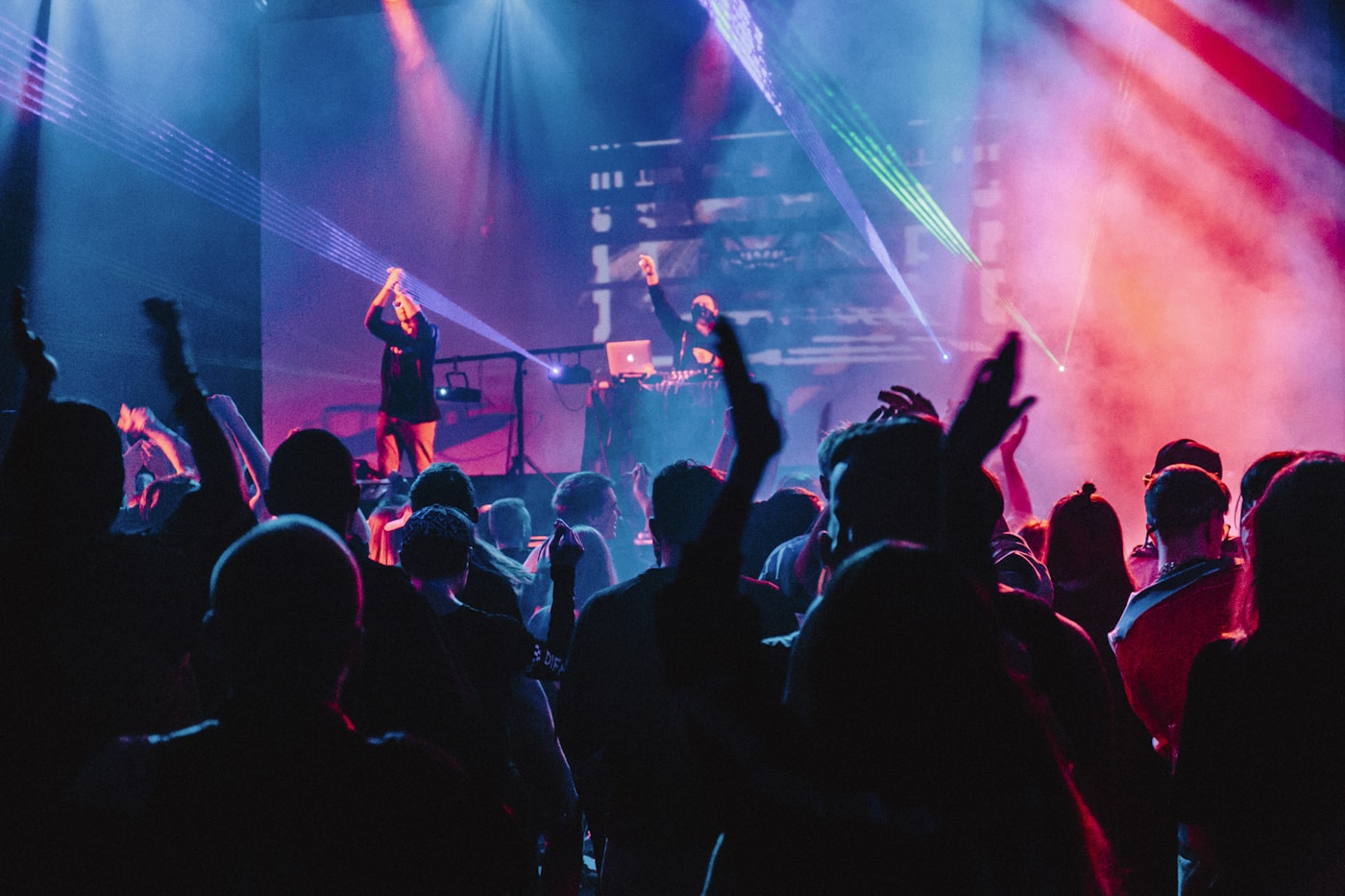
Echo Vanta: Sound as Ceremony
A decade inside Berlin's underground forged a singular artist who doesn't perform sets — she conducts rituals.

Yuki Tanaka
Music Writer & Curator
In the months after her Boiler Room set broke a million views, Echo Vanta didn't celebrate. She retreated.
'Attention is interesting but it isn't the point,' she says, standing in her studio — a converted industrial space in Neukölln that smells of old wood and something faintly electrical. On the walls: acoustic panels, and a single handwritten note that reads 'serve the room.' It is, she explains quietly, both instruction and philosophy.
A Decade of Listening
Echo Vanta has spent the better part of ten years inside Berlin's underground — long enough to have watched multiple scenes emerge, peak, and dissolve. She arrived from São Paulo at 22 with almost nothing except an obsessive relationship with music and a willingness to apprentice herself to the city. She spent the first two years attending everything she could: Berghain on Sunday afternoons, illegal warehouse parties on the outskirts of the city, intimate listening sessions in apartments.
'I was building a vocabulary before I had anything to say,' she explains. 'I wasn't ready to play yet. I needed to understand what I was walking into.'
“The best sets I've ever heard weren't about the DJ. They were about the room becoming something. That's the only thing worth chasing.”
The Architecture of a Set
What makes Echo Vanta distinct in an era where deep house has become shorthand for any slowly evolving track is the structural intelligence of her programming. She doesn't play collections of records — she constructs narratives. Her sets move with the logic of a film score: exposition, tension, release, and resolution. A four-hour performance has an arc she's planned, modified in the room, and then departed from again when the moment demanded.
She pulls out a worn notebook — pages folded, corners torn. 'I map every set in advance. Not the tracks, but the emotional architecture. Where does it get dark? Where does it breathe? Where does it peak?' She pauses. 'The records fill in the map. The map doesn't fill in the records.'
On the Viral Moment
The Boiler Room set that went viral was recorded at De School, three weeks before the legendary Amsterdam venue closed permanently. Thousands of people watched live. Millions have watched it since. The set is extraordinary — four hours of deep, searching, patient music that ends somewhere profoundly different from where it starts.
'What I feel about that set is complicated,' she says carefully. 'Something happened in the room that night that was real. The crowd understood something. We built something together. But when you watch a recording of it, you're watching a document of something that already happened. The actual event can't be transmitted.' She's not dismissive of the viral attention — she understands its utility — but she maintains a clear-eyed separation between the recorded artifact and the lived experience.
What Comes Next
Echo Vanta has an album coming. She won't say when, won't describe it beyond 'long.' She is preparing for a residency at Fabric London in the spring and is quietly working with three emerging Berlin artists she won't name. She mentions Mystics of Sound as a platform that understood what she was building before most industry structures could — a place, she says, where the infrastructure matched the intention.
As I leave, she's back at her decks, headphones on, eyes closed. Not performing for anyone. Just listening. Just working. The note on the wall catches the light: 'serve the room.' Outside, Berlin is doing whatever Berlin does. In here, the ceremony continues.